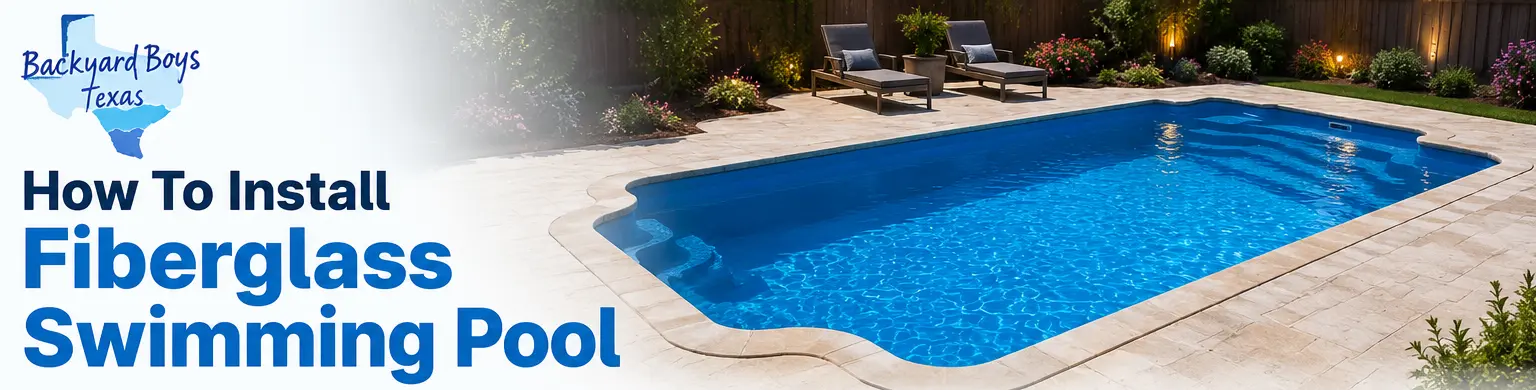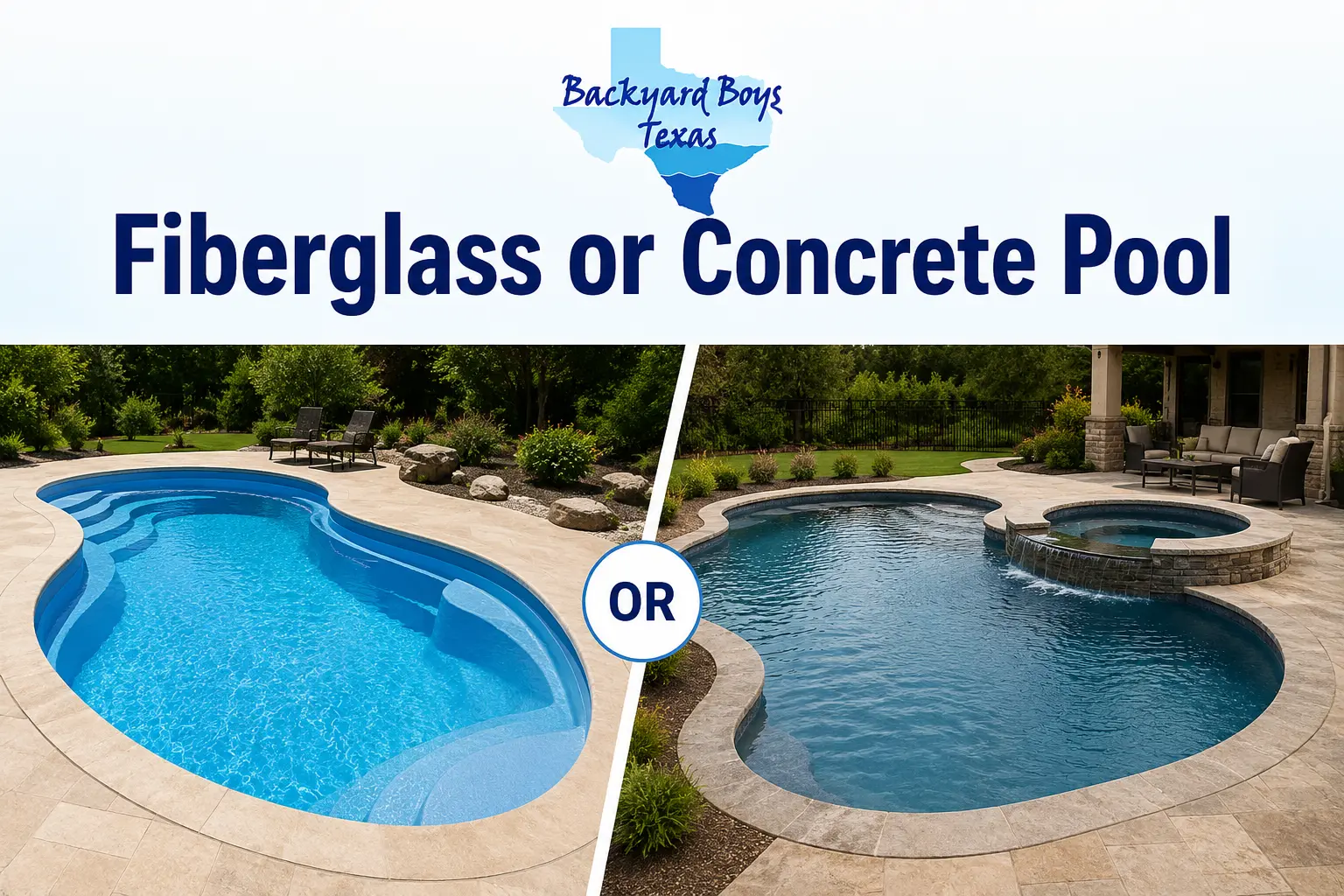
- Fiberglass pools typically install in one to four weeks and start lower on price, roughly $25,000 to $65,000 installed, according to Angi’s 2026 cost data.
- Concrete, or gunite, pools take three to six months to build and typically run $35,000 to $100,000 or more, but offer nearly unlimited custom shapes.
- Central Texas sits on expansive Black land Prairie clay, the same soil that cracks driveways and foundations across the region. That’s a real engineering factor here, not a sales pitch.
- Fiber glass tends to win on ten year maintenance cost and time to first swim. Concrete tends to win on design freedom and raw lifespan when engineered and maintained correctly.
- As of July 2026, Texas still has no single statewide license specific to residential pool construction, though the electrical and plumbing work on a pool falls under separate state licenses. Vet any builder carefully either way.
If you’re comparing a fiber glass vs concrete pool for your backyard in Rosebud, Waco, or Temple, you’ve probably already read a handful of articles that all say the same three things. Fiber glass installs faster. Concrete costs more. Both are great options. True enough, as far as it goes.
What most of those articles skip is the one variable that matters most if you’re building on Central Texas dirt: the ground underneath the pool. We’ve spent years installing Latham fiber glass pools across Rosebud, Waco, Temple, and Killeen, and we’ll say the thing most fiber glass dealers won’t. Concrete isn’t a bad pool. Built the right way, it’s a genuinely good one. But for a lot of backyards sitting on Black land Prairie clay, we’d start the conversation with fiber glass first. Here’s why, section by section, with the real numbers.
What Is the Real Difference Between a Fiberglass Pool and a Concrete Pool?
A fiberglass pool is a single composite shell, built off site in a factory mold from layers of fiberglass and resin, then finished with a gel coat, a smooth, non porous surface layer that gives the pool its color and its resistance to algae. Latham, the manufacturer behind the pools we install, hand drafts each shell before it ships to the job site on a flatbed truck.
A concrete pool, sometimes called a gunite or shotcrete pool, starts as a hole in the ground. Crews build a steel rebar frame to hold the pool’s shape, then spray concrete over that frame under pressure. Once it cures, the surface gets finished with plaster, aggregate, or tile. There’s also a third option, vinyl liner pools, which use a steel or polymer wall structure with a fitted liner. Vinyl liners are worth a separate conversation. This one is about the two options homeowners in our area compare most: fiberglass and concrete.
The core distinction is manufacturing location. Fiberglass gets built in a controlled factory environment and shipped complete. Concrete gets built in your backyard, at the mercy of weather, soil, and crew scheduling. That single fact drives almost every other difference on this page.
How Do Fiberglass and Concrete Pools Compare on Cost in Rosebud and Central Texas?
Pricing varies by size, depth, and site conditions, but the industry data lines up fairly consistently. According to Angi’s 2026 pricing guide, fiberglass installation runs $25,100 to $49,000, while concrete runs $35,000 to $65,000. Backyad Boyz 2026 comparison puts fiberglass starting around $50,000 and concrete starting around $60,000, with some Central Texas concrete builds exceeding $100,000 once decking, water features, and engineering for difficult soil get added in.
The upfront number only tells half the story. Ten year maintenance is where the gap widens.
| Category | Fiberglass | Concrete (Gunite) |
| Starting installed cost | $25,000 to $65,000 | $35,000 to $100,000+ |
| Typical installation time | 1 to 4 weeks | 3 to 6 months |
| 10 year maintenance cost | Roughly $4,000 | $15,000 to $27,000 |
| Resurfacing interval | Rare, gel coat dependent | Every 10 to 15 years |
| Typical lifespan | 25 to 30 years | 50+ years, with resurfacing |
| Customization | Pre engineered shapes | Fully custom |
| Surface | Smooth, non porous | Porous, higher algae risk |
We’d rather give you accurate pricing than a misleading starting estimate. If you’d like an exact quote for your backyard, explore our fiberglass pools and request a personalized estimate today.
Which Pool Actually Installs Faster?
Fiberglass wins this one clearly, and it isn’t close. Once the shell arrives, a crew excavates the hole, sets the shell, backfills around it, and connects the plumbing, often in a matter of days. Decking, fencing, and landscaping add a few more weeks depending on scope, but the pool itself can be swimmable well inside a month.
Concrete construction runs in stages that can’t be rushed. Excavation and steel framing come first, then the gunite gets sprayed and needs roughly seven to ten days of careful curing before it can be finished. Plastering, tiling, decking, and equipment hookup stretch the whole process to three to six months in most Central Texas builds, longer if permitting or weather causes delays.
If your goal is swimming by early summer and you’re starting the conversation in spring, that timeline difference alone often settles the decision.
Why Central Texas Clay Soil Changes the Math
The ground under Rosebud, Waco, and much of this corridor is Blackland Prairie clay, the same dark, heavy soil documented by local foundation repair companies as a leading cause of cracked driveways, uneven sidewalks, and shifting slabs across the region. That clay swells when it’s wet and shrinks hard during drought, and the cycle repeats every year.
A rigid, on site poured structure like a concrete pool shell sits directly in that moving ground. Leak detection crews working the Austin to Waco corridor have documented gunite cracks that trace straight back to this shrink and swell cycle, sometimes reopening even after a patch, because the soil movement never actually stopped. Properly engineered concrete pools address this with deeper foundations, reinforced steel, control joints, and a geot echnical soil report before the first shovel goes in. That engineering is exactly why concrete builds in this region often run longer and cost more than the national averages above suggest.
A fiber glass shell behaves differently. Because it’s a single, flexible composite unit rather than a poured slab, it tends to move with the soil rather than fight it, and it isn’t relying on a multi day cure cycle that clay movement can interrupt. That doesn’t mean fiberg lass is immune to every soil issue. Poor back fill or bad drainage can still cause problems for either pool type. It means the specific failure mode that shows up most often in this region’s concrete pools, cracking tied to expansive clay, isn’t the same risk profile for a properly installed fiber glass shell.
Which Pool Needs Less Ongoing Maintenance?
Fiber glass’s gel coat is smooth and non porous, which means algae has a harder time taking hold and the surface stays cleaner between service visits. Owners typically run fewer chemicals and spend less time brushing.
Concrete’s plaster or aggregate surface is porous by nature. Algae and calcium deposits work into the texture, which means more brushing, more chemicals to hold a stable pH, and a resurfacing job every 10 to 15 years that can run into the thousands depending on size and finish. That resurfacing cost is baked into the 10 year maintenance gap in the table above.
Neither pool is maintenance free. Both need regular filtration, water balance checks, and seasonal opening and closing in a climate like ours. The difference is in degree, not category. Our maintenance plans cover both pool types if you’re weighing this as part of the decision.
How Long Will Each Pool Actually Last?
Fiberglass shells are generally rated for 25 to 30 years of service life, according to Angi’s 2026 data, and many perform well past that with routine care. Concrete pools can last 50 years or more, but that figure assumes ongoing resurfacing roughly every decade to decade and a half. Skip that maintenance and a concrete shell’s usable life drops well before the structure itself fails.
Put another way: concrete has the longer ceiling, but it only gets there with consistent reinvestment. Fiber glass has a shorter ceiling but a flatter, more predictable cost curve to reach it.
Which Pool Wins on Design and Customization?
Concrete, without much argument. Because it’s built on site, a concrete pool can take almost any shape a designer can draw: a natural lagoon look, a vanishing edge, a built in grotto, whatever the yard and budget allow. That freedom is real, and if a specific, non standard shape is the priority, concrete is the honest answer, not fiber glass.
Fiberg lass is pre engineered, which limits shape and size to what’s already been molded. That said, Our catalog runs dozens of shapes, from traditional free form to modern rectangular lines, plus tanning ledges, spillovers, and integrated spa options that cover most of what homeowners actually ask for in practice. You can browse the fiberglass pool shapes we install most often in Rosebud and the surrounding area to get a sense of the range.
If your backyard needs a truly custom footprint to work around a slope, a tree, or an unusual lot line, that’s a fair reason to lean concrete. If a great looking pool from a wide catalog gets the job done, fiber glass gets you there faster and for less.
Is Fiber glass or Concrete Better for Central Texas Heat?
Two things matter here: how hot the water gets and how hard algae works against you. Fiber glass acts as a natural insulator, which several industry sources point to as a reason fiber glass owners report lower heating costs than concrete owners running the same size pool. In a region where pool season stretches from April into October, that adds up.
The algae angle matters just as much. Texas summers push water temperatures into the range where algae multiplies fastest, and concrete’s porous surface gives it more places to grab hold than fiber glass’s smooth gel coat does. That’s part of why fiber glass owners in this climate tend to report an easier maintenance routine through the hottest stretch of the year, on top of the general maintenance gap covered earlier.
What Should You Ask Before Hiring a Pool Builder in Rosebud?
Texas still doesn’t require one single statewide license specifically for residential pool construction, as of July 2026. That surprises a lot of homeowners, since electricians and plumbers working on your pool’s systems do need their own state licenses under separate programs. The gap means the burden of vetting a builder falls on you.
Ask any builder, fiber glass or concrete, these questions before signing anything:
- Can you show completed projects in Rosebud, Waco, Temple, or Killeen specifically, not just renderings?
- Are your electrical and plumbing subcontractors licensed under their respective state programs?
- Do you pull permits, and will you provide proof once they’re filed?
- For concrete builds, will you run a geo technical soil report before construction starts?
- What does your warranty actually cover, and for how long?
- Can you provide proof of liability insurance and workers’ compensation coverage?
A builder who answers all six without hesitation is worth your time. A builder who waves off the soil question or gets vague about insurance is a red flag regardless of which pool type you choose.
Fiber glass or Concrete for Your Rosebud Backyard?
Choose fiber glass if you want a faster build, a lower 10 year maintenance bill, and a pool that handles Central Texas clay without the specific cracking risk tied to on site curing.
Choose concrete if a fully custom shape is non negotiable for your lot, and you’re prepared to budget for a geo technical soil report and resurfacing every 10 to 15 years to protect that investment.
Either way, the soil under your yard deserves the same attention as the pool going on top of it. Most national pool comparisons skip that part. We don’t think you should.
Frequently Asked Questions
Is a fiber glass pool cheaper than a concrete pool in Texas?
Yes, in most cases. Fiber glass typically starts around $25,000 to $50,000 installed, while concrete typically starts around $35,000 to $65,000 and can climb past $100,000 with custom features or difficult soil. Fiber glass also costs less to maintain over a 10 year span, which widens the total cost gap beyond the initial price tag.
How long does it take to install a fiber glass pool vs a concrete pool?
A fiber glass pool can be swim ready in one to four weeks once the shell arrives on site. A concrete pool typically takes three to six months from excavation to first swim, since gunite needs time to cure before finishing work can begin.
Which pool holds up better in Central Texas clay soil, fiber glass or concrete?
Fiber glass shells tend to move with expansive clay rather than crack under it, since they’re a single flexible unit rather than a poured structure. Concrete pools can be engineered to handle clay soil with proper rebar, control joints, and a geo technical report, but that engineering adds cost and time.
Do fiber glass pools crack?
It’s rare, but not impossible. Cracking usually traces back to poor back fill, an improperly prepared base, or a lower quality shell rather than the material itself. A shell installed with the right site prep is built to flex with normal ground movement.
How much does pool maintenance cost over 10 years?
Fiber glass owners typically spend around $4,000 over a decade, largely on chemicals and routine service. Concrete owners typically spend $15,000 to $27,000 over the same period, mainly due to resurfacing and higher chemical use from the porous surface.
Can I get a custom shape with a fiber glass pool?
You’re choosing from a manufacturer’s catalog rather than a blank canvas, but Latham’s lineup includes dozens of shapes plus tanning ledges, spillovers, and spa addons. If you need a fully custom, non standard footprint, concrete remains the more flexible option.
Do I need a licensed pool builder in Texas?
Texas doesn’t require one statewide license specifically for pool construction, but electricians and plumbers working on your pool’s systems must hold their own state licenses. Ask any builder for proof of insurance, subcontractor licensing, and permit history before signing a contract.
Which pool is better for Rosebud’s summer heat?
Fiber glass tends to perform better through peak heat. Its non porous gel coat resists the faster algae growth that hot water encourages, and it retains heat more efficiently than concrete, which several industry sources link to lower water heating costs over a full pool season.