


What You Need to Know in 30 Seconds
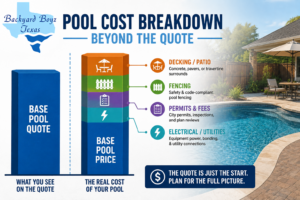
The quote is rarely the number you pay. Decking, fencing, permits, and electrical commonly add 30 to 50 percent on top of the base build price.
Your soil sets your budget. Central Texas sits on Blackland Prairie clay, so ground conditions drive cost and material choice more than anything on a brochure.
Call 811 first. Texas law requires a call at least two business days before any digging, even in your own backyard.
Your city sets the barrier rules, not the state. In Waco that means a 48 inch barrier with a self closing, self latching gate.
Some choices close early. Tanning ledges, spas, lighting, and depth are decided before excavation. Retrofitting them later is expensive or impossible.
Most of the things to know before building a pool have nothing to do with the pool itself. They are about your dirt, your city, your budget past the quote, and the choices that lock in the day the excavator arrives.
We build fiberglass pools across Waco, Temple, Killeen, Belton, Salado, and Rosebud. The questions homeowners ask us in month three are almost always the questions to ask before building a pool in the first place.
So here is that conversation, in the order it matters. Treat it as what to know before building a pool on a Central Texas lot, told straight, including the parts that cost money.
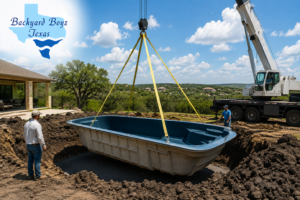
What does building a pool actually cost, and what is missing from the quote?
The cost of building a pool splits into two numbers: the pool shell and installation, and everything around it. Homeowners plan for the first and get blindsided by the second.
According to Home In Depth’s 2026 inground pool cost guide, a 12 by 24 foot inground pool runs roughly $35,000 to $65,000, and fiberglass lands around $175 to $330 per square foot. The same guide notes that decking, fencing, permits, and electrical typically push the total 30 to 50 percent above the base quote.
That gap is where the arguments happen. A quote is a menu, not a bill.
Here is what tends to sit outside the headline number on a Central Texas pool construction project:
- Decking: Thursday Pools’ Texas cost data, updated June 2026, puts a 1,200 square foot poured concrete patio near $11,650 and a paver patio near $14,250.
- Fencing: required by your city before final inspection, not optional.
- Spoil removal: excavated clay has to go somewhere, and hauling it off is a line item.
- Electrical: a GFCI protected circuit and bonding for the pool equipment, run by a licensed electrician.
- Landscaping repair: heavy equipment leaves tracks. Budget for grass, irrigation, and a wider gate if yours is too narrow.
Get a written, itemized estimate before you sign anything. A builder who will not break the number down is telling you how change orders will go later.
Why does Central Texas soil change your budget before anything else?
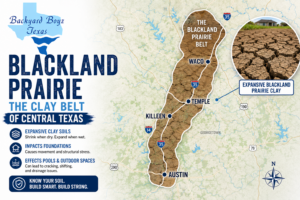
Our region sits on the Blackland Prairie, a belt of dark expansive clay running through Waco, Temple, Killeen, and Austin. Its signature soil, Houston Black, is the Texas state soil and one of the most reactive clays in the country.
Expansive clay behaves like a sponge with an attitude. It swells when it takes on water and shrinks hard when it dries, and that cycle pushes on anything buried in it.
Engineers measure this with the plasticity index, a lab number for how much a soil moves with moisture. The 2021 International Building Code flags soil as expansive at a plasticity index of 15 or higher. Houston Black clay routinely tests between 40 and 60.
Three things follow, and they all hit your pool project:
- Excavation is slower and harder. Wet clay is heavy, dry clay is like concrete, and neither digs on schedule.
- Backfill and drainage matter more here than almost anywhere. How the shell is bedded and how water is moved away from it separates a stable pool from a moving one.
- Material choice stops being cosmetic. A one piece shell that flexes with ground movement behaves differently in this soil than a rigid poured structure.
This is the biggest reason a Texas build should not be priced off a national average.
Which pool material is right for your yard?
The short answer: fiberglass, gunite concrete, and vinyl liner each trade something away, and the right pick depends on your soil, your timeline, and how custom you want to go.
- Fiberglass: a pre manufactured one piece shell, set with a crane. Fastest install, smoothest surface, lowest chemical and cleaning load. Shapes are limited to what the manufacturer molds.
- Gunite or concrete: sprayed and shaped on site. Total design freedom, highest cost, resurfacing every several years.
- Vinyl liner: lowest entry price, with a liner replacement cycle built into ownership cost.
We install Latham fiberglass shells, so treat this as our stated preference rather than a neutral verdict: in Blackland Prairie clay, we would choose fiberglass, because the flex of the shell and the short time the hole stays open both work in your favor.
For the full side by side on cost and lifespan, see our fiberglass vs concrete pool comparison for Central Texas backyards.
How long does a pool build really take?
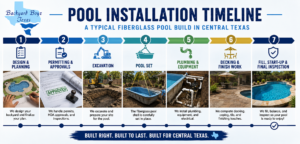
Plan the pool building timeline in months, not weekends. On site work for a Latham fiberglass build often runs a few weeks, but the calendar from signed contract to first swim is longer once permits, inspections, and weather take a turn.
Permitting alone can take weeks depending on your city. Rain does not just stop work. It stops work, then keeps the clay too wet to move for days afterward.
So build a schedule with checkpoints instead of one finish date, and pad it. We tell homeowners to add 20 to 30 percent to any quoted timeline, ours included.
Timing the start matters too. The stage by stage sequence is in our guide to how fiberglass pool installation works, and the case for a winter start is in the best time of year to install a pool in Central Texas.
its and safety rules apply before you dig?
Two separate obligations, and homeowners usually know about only one.
First, the dig itself. Texas law requires homeowners and excavators to contact 811 at least two business days before digging, excluding weekends and holidays, even for work in your own yard. Texas811 then notifies utility operators to mark their lines. The service is free, and skipping it is how people hit a gas line.
Second, the pool permit and the barrier. Texas has no single statewide residential pool fence law. Your city adopts and enforces the rules, usually a version of the International Swimming Pool and Spa Code, and the City of Waco handles this through residential construction permits.
Across most Central Texas cities that means a pool barrier at least 48 inches high, gaps under 4 inches, and a gate that is self closing and self latching with the release out of a child’s reach.
Take this seriously beyond the inspection. The CDC reports that drowning is the leading cause of death for children ages 1 to 4 in the United States, and that most drownings in that age group happen in home swimming pools.
CDC guidance and the CPSC’s safety barrier guidelines both point the same direction: layers of protection. A barrier, door alarms, a cover, and an adult whose only job is watching the water.
Call your homeowners insurance carrier before you build, and if you have an HOA, submit plans before the design is final. Either can change what you are allowed to do. Our full checklist for families is in this guide to staying safe in the pool.
Which decisions cannot be changed after construction starts?
Some features are add ons. Others are structural, and the window closes the day the shell goes in the ground.
Lock these in during design:
- Tanning ledge or bench seating, which is molded into the shell
- Spa or spillover, which needs its own plumbing and equipment
- LED lighting, because the conduit is buried before the deck is poured
- Water features and deck jets, same reason
- Automatic cover tracks, which are built into the coping
- Deck size and layout, easier to widen now than to cut out later
The regret we hear most is deck space. People size the deck to the pool, then find nowhere to put furniture, shade, or a table. Which upgrades earn their cost is covered in our breakdown of pool features worth adding during installation.
What does a pool cost to own after the build?
Ownership is a monthly line item, not a one time purchase. Budget for chemicals, filter media, electricity for the pump, and either your own weekly time or a service.
A few levers keep the number down. A variable speed pump run in off peak hours costs less than an old single speed pump running all afternoon. A cover cuts evaporation, chemical loss, and skimming time in one move. A fiberglass surface also resists algae better than rough gunite, which shows up as less shock and less brushing.
If water chemistry is not how you want to spend Saturdays, our pool maintenance service handles it year round. Pick your route before the pool is full, not after.
On the other side of the ledger, a well built pool can support resale value where buyers expect one. We looked at the numbers in does a pool add value to your home in Texas.
How do you tell a good pool builder from a bad one?
This decision determines how every other decision goes. Ask these before you sign:
- Can you show three local builds from the last year? Recent and nearby beats a big gallery.
- Who pulls the pool permit and schedules inspections? The answer should be the builder, not you.
- What is the written change order process? Vague answers here get expensive later.
- What exactly is excluded from this quote? Ask plainly, get it in writing.
- Who is on site each day, and what is the contact number? Crews subcontracted three layers deep are how projects drift.
- What does the warranty cover, and who honors it? Shell warranty and installation warranty are two different things.
An honest builder tells you what could go wrong on your specific lot. If nothing in the sales conversation carries a caveat, that is not confidence. That is a pitch.
So here is ours. Fiberglass is not right for every yard. If you want a true custom shape, a very large pool, or a depth outside what manufacturers mold, gunite is the honest answer and we will say so.
Before you break ground: the short version
| Decision | Do it when | Why it matters |
|---|---|---|
| Set the full budget | Before quotes | Base price plus 30 to 50 percent for the rest |
| Get a soil and site read | Before design | Houston Black clay drives cost and method |
| Choose the material | Before design is final | Changes shape, timeline, and lifetime cost |
| Call Texas811 | Two business days before digging | Required by Texas law, and free |
| Confirm permit and barrier rules | Before design is final | Your city sets them, not the state |
| Lock in features | Before excavation | Ledges, spas, lighting cannot be retrofit |
| Check HOA and insurance | Before design is final | Either can change what you can build |
| Plan the deck and furniture | With the pool design | The most common regret we hear |
Ready to talk through your yard? Request a free quote from Backyard Boyz Texas and we will walk your site, read the soil conditions, and give you an itemized number with nothing hidden under it.
Backyard Boyz of Texas, LLC | 162 County Rd 347, Rosebud, TX 76570 | (254) 855-5616
Frequently asked questions
What do most people wish they knew before building a pool?
Three answers come up over and over. The total runs higher than the quote, the schedule runs longer than the estimate, and some features cannot be added later.
Homeowners who budget for decking and fencing up front, pad the timeline, and choose ledges and lighting during design rarely end up disappointed.
How much does it cost to build a pool in Texas?
It depends on size, material, and site conditions. Home In Depth’s 2026 cost guide puts a 12 by 24 foot inground pool at roughly $35,000 to $65,000, with fiberglass around $175 to $330 per square foot. Central Texas clay pushes site preparation above national figures, which is why a site visit beats an online calculator.
Do you need a permit to build a pool in Texas?
Yes, in nearly every incorporated city. Texas has no statewide residential pool fence law, so your municipality adopts and enforces the code, typically a version of the International Swimming Pool and Spa Code. Your builder should pull the permit and schedule inspections. Unincorporated county areas vary, so confirm with your permitting office first.
What is the most expensive part of building a pool?
The pool shell and excavation are usually the largest single line, covering digging, setting the structure, and plumbing it. Decking is the biggest surprise after that. A 1,200 square foot concrete patio in Texas ran near $11,650 as of June 2026, per Thursday Pools’ cost breakdown, with pavers higher.
What is the best time of year to build a pool in Central Texas?
Winter and early spring generally win. Crews are less booked, schedules hold better, and finishing before summer means you swim the season you paid for. Summer starts compete with peak demand. Our seasonal breakdown covers the month by month tradeoffs.
How deep should a backyard pool be?
For most families, 3.5 to 6 feet covers swimming, playing, and lounging without wasted volume. Deeper pools cost more to excavate, heat, and treat, and safe diving needs far more depth than people assume. Decide depth during design, since it is molded into a fiberglass shell.
Does a pool raise your homeowners insurance?
Usually yes, and the increase varies by carrier and by the safety features installed. Many insurers want a compliant pool barrier and may adjust liability coverage. Call your carrier before construction, so the number is known and any required fencing lands in the build budget.
Do you need a variable speed pump?
Most new Central Texas pools use one, and the reason is running cost. A variable speed pump runs longer at lower speed for less electricity than a single speed unit running short and hard. Over a Texas summer, that difference on the power bill is usually the largest operating saving available.